The Mediator — Part II
"Denied the stage, he became its archivist."
The St Michael and St George honor did little to soothe his internal friction. Throughout the early 1920s, his diaries begin to show the "superficiality" of diplomatic life as a form of spiritual suffocation.
"It seems so odd that I should have lived so long and worked so hard... and have nothing to show for it... Like an old tennis-ball which has been a week in the rain." — Harold Nicolson
The Great Pivot: Seeking a Backbone
In 1929, at the age of 43, Harold Nicolson resigned from the Foreign Office. His decision deceptively looked like a sacrifice for his marriage—his wife, Vita Sackville-West, refused to live the nomadic life of a diplomat's spouse in Berlin. But internally, it was a desperate attempt to find a "backbone" outside the stifling comfort of the diplomatic machine.
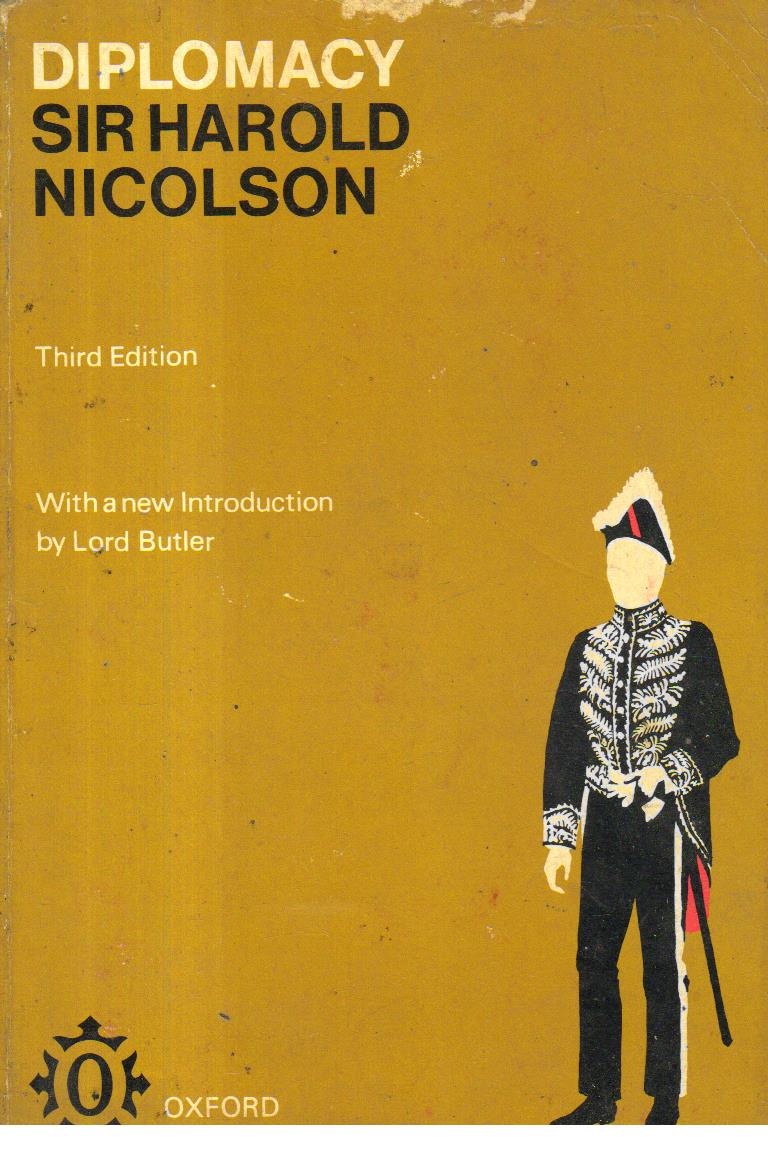
Nicolson realized that as a Mediator, he had become a master of "agreeableness" — the art of making every room more pleasant while slowly suffocating inside it. His fast-moving mind, designed for synthesis and structural clarity, had been reduced to a neutral instrument in service of other people's agendas. As he later wrote with characteristic precision: "The tragedy of diplomatic life is that it is so agreeable."
Agent Interjection
The Mediator doesn't fail at politics. Politics fails at nuance.
In the London of the 1930s, emerging from the sterile environment of diplomacy, Nicolson found himself in the chaotic landscape of British politics. His first major misstep was joining Sir Oswald Mosley's "New Party." Initially, he perceived the movement as a form of intellectual renewal. Yet as it rapidly drifted toward fascism and populism, a deep rupture emerged between the "prudence" of the diplomat and the "radicalism" of the street. This was the first clear indication that Nicolson's political instincts were ill-suited to the emotional and volatile terrain of domestic politics. More than one account attributes his failure less to misjudgment than to a deeper disconnect: "I fear the 'People' means nothing to me except ugliness."
Diplomatic Temperament vs. Election Squares
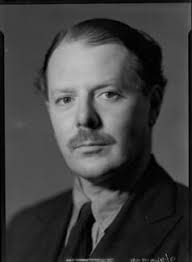
He entered Parliament in 1935, only to lose his seat in 1945, never to return. The very quality that made him an exceptional observer, his distance, became a liability in a system that demanded proximity. As he admitted with unusual clarity: "I lack a lust for battle… I have no combative qualities." Politics required performance; Nicolson remained, at his core, a recorder.
And yet, this apparent political failure became the condition for something far more enduring. In his diaries, later published as the monumental Diaries and Letters of Harold Nicolson, he captured the inner mechanics of power with a precision few active politicians could afford. His works on diplomacy, especially Diplomacy, would go on to shape the intellectual framework of the field itself, while biographies such as King George V revealed his ability to translate statecraft into narrative. His contributions to journalism and essay writing further extended this influence, allowing him to interpret politics rather than survive it.
True to the "public intellectual" role this archetype is well suited for, recognition came through cultural authority: he was appointed a Knight Bachelor, becoming Sir Harold Nicolson, a title that quietly acknowledged the domain in which he truly excelled: politics as thought.
Meanwhile, Sissinghurst Castle Garden, created with Vita Sackville-West, stood as a living metaphor for his inner orientation: where politics demanded conflict, he cultivated order; where public life required noise, he pursued structure, beauty, and control.
In the end, Nicolson did not fail at politics—he outgrew its immediacy. Denied the stage, he became its archivist. And in doing so, he secured something more durable than power: perspective.
Nicolson's story whispers Mediators a very important lesson: when Mediators share all their trial and error with the world as a book or a diary, they become owners of an immortal legacy, just like Nicolson.
Written by Pinar Atik
← Read Part I: The Mediator's rise and the crushing blow of Paris.
← Part IThe Mediator — Deep Dive
90-day career roadmap, shadow analysis, 20-point strategic manifesto, and AI-age positioning.
Get the Full Protocol →Which archetype are you operating from?
Discover Your Archetype →SIS Intelligence Drops
Archetype insights and structural career intelligence. No fluff.